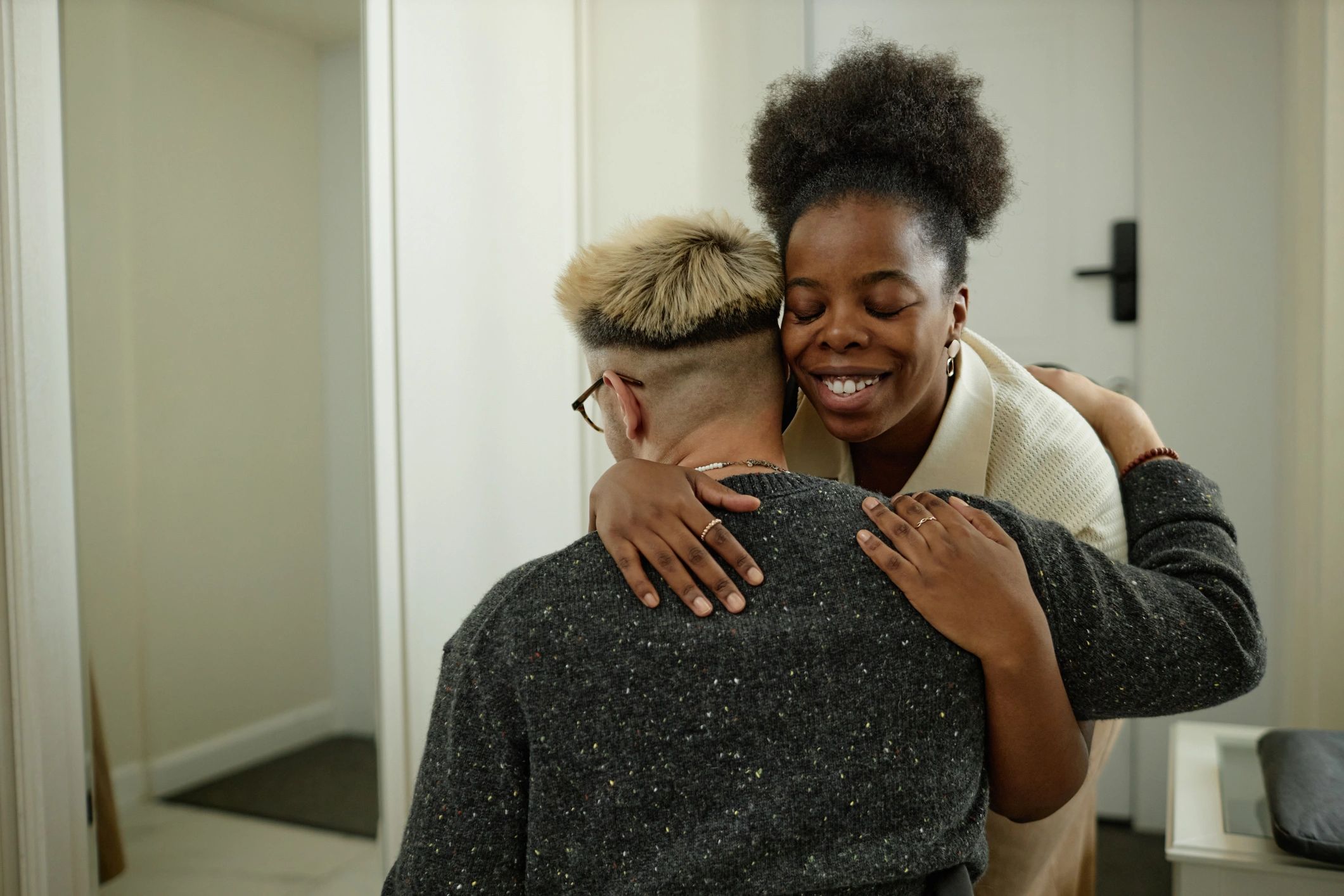
Navigating Relationships When Disability Is Part of the Picture
Disability changes relationships — romantic, familial, and social. Not always for the worse. But always in ways that demand honesty, flexibility, and a willingness to rewrite the rules.

There is a version of this story that gets told a lot. The devoted partner who stands by their disabled loved one through everything. The family that rallies. The friends who show up. The community that holds you.
That version is real. I've lived parts of it.
But there's another version that doesn't get told nearly as often — the one where relationships fracture under the weight of chronic illness. Where people disappear. Where the dynamics shift in ways nobody prepared for, and you're left trying to figure out who you are to each other now.
Both versions are true. And if we're going to talk honestly about disability and relationships, we have to hold both.
The Relationship Nobody Warned Us About
When my wife's health changed, our relationship changed with it. That's not a complaint — it's just a fact. The person you love is still there, but the shape of your life together shifts. The things you assumed you'd do together, the roles you thought were fixed, the future you'd sketched out in your heads — all of it becomes negotiable.
What nobody warned us about was how disorienting that renegotiation would be. Not because we didn't love each other, but because we'd never been given a map for this territory. The culture we grew up in had exactly two templates for disability in relationships: the tragedy narrative (everything is loss) and the inspiration narrative (love conquers all). Neither one was useful.
What we actually needed was something more honest: a framework for navigating change without pretending it isn't happening, and without letting the change become the whole story.
The Caregiver Identity Problem
Here's something I've wrestled with for a long time: when you become a caregiver to someone you love, you gain a role that can start to swallow the relationship itself.
I am my wife's husband. I am also, in practical terms, someone who helps manage her medical appointments, tracks her medications, monitors her symptoms, and picks up the slack on the days when her body won't cooperate. Those two things — husband and caregiver — are not always easy to hold at the same time.
The caregiver identity, if you're not careful, can start to define the entire relationship. You stop being partners navigating life together and start being a patient and a support system. That shift is subtle, and it happens gradually, and it can do real damage to both people if it goes unexamined.
What's helped us is being deliberate about carving out space that belongs to the relationship — not the illness, not the logistics, not the caregiving. Time that is just ours. Conversations that aren't about symptoms or appointments or what needs to happen tomorrow. It sounds simple. It requires constant, intentional effort.
What Disability Reveals About Your People
One of the things chronic illness does — and this is both brutal and clarifying — is reveal who your people actually are.
Some people rise. They show up consistently, not just in the crisis moments but in the long, ordinary, grinding middle. They learn. They adapt. They don't need the situation to be comfortable for them in order to stay present.
Some people disappear. Not always dramatically — sometimes it's just a slow fade. The invitations that stop coming. The check-ins that get less frequent. The friends who were great at fun but couldn't figure out how to be present for hard.
And some people — this is the one that stings most — make the disability about themselves. They need reassurance that they're being helpful enough. They need the disabled person to perform gratitude. They need the situation to be manageable and inspiring rather than messy and real.
I don't say this to be harsh. People are doing their best with the tools they have. But if you love someone with a disability or chronic illness, it's worth asking yourself honestly: which kind of person am I being?
The Grief That Doesn't Have a Name
There is a particular kind of grief that comes with watching someone you love lose capacities over time. It doesn't have a clean name. It's not bereavement — the person is still here. It's not the same as the grief the disabled person themselves experiences, which is its own complex thing.
It's something like mourning a future that kept revising itself. The trip you'd planned that had to be cancelled. The version of your life together that existed before the diagnosis. The ease that used to be there and now requires work.
That grief is real, and it deserves to be acknowledged — not as a complaint, not as a burden placed on the disabled person, but as something the caregiver or partner needs to process, ideally with support that isn't the person they're caregiving for.
This is one of the reasons caregiver community matters so much. Not to vent or to be negative, but to have a space where the complexity of the experience can be held without judgment.
Rewriting the Rules of Intimacy
Disability often requires couples to rethink what intimacy looks like. Physical limitations, pain, fatigue, medication side effects — all of these can affect the ways partners connect. And the culture we live in is spectacularly unhelpful on this front, because it has essentially one template for intimacy and no language for anything outside it.
What I've learned is that intimacy is far more expansive than that template suggests. It lives in the slow mornings when we don't have to be anywhere. In the inside jokes that have accumulated over years. In the way she knows exactly what I mean before I finish the sentence, and vice versa. In the trust that has been built through hard things, not despite them.
Disability didn't diminish our intimacy. In some ways — and I say this carefully, because I don't want to romanticize what is genuinely difficult — it deepened it. Because we've had to be honest with each other in ways that comfortable lives don't always require. Because we've had to choose each other, deliberately, on the hard days.
For the Families Who Are Figuring This Out
If you're a family member of someone with a disability and you're trying to figure out how to show up — here is what I'd offer.
Follow their lead. The disabled person in your life is the expert on their own experience. Your job is not to fix or manage or inspire. It's to listen and respond to what they actually need, not what you imagine they need.
Don't make it about your feelings. Your grief, your discomfort, your fear — those are real and they deserve space. But that space should not be the disabled person's lap. Find your own support.
Stay in it for the long haul. The crisis moments are easy to show up for. The Tuesday afternoons three years in, when nothing dramatic is happening but everything is still hard — that's where the real showing up happens.
Ask, don't assume. "What would be helpful right now?" is always the right question. "I know what you need" almost never is.
The Relationships Worth Fighting For
I want to end with this: disability tests relationships. It tests them hard. And some relationships don't survive that test — not because anyone is a bad person, but because not every relationship was built for this kind of weight.
But the ones that do survive — the ones that get rebuilt on honesty and flexibility and genuine care — those relationships have something in them that the easy ones often don't. A kind of depth that only comes from having been through something real together.
My wife and I are still figuring it out. We probably always will be. But I'd rather be figuring it out with her than have the simpler version of a life we never actually lived.
That's what this community is for — the people who are in it, figuring it out, refusing to let the hard parts be the whole story.
— Craig, founder of Don't-Dis-Abilities
Keep reading:
- Living With MS: What Nobody Tells You — the full picture of what daily life with MS actually looks like
- Building a Support Network as a Disabled Person — how to find your people and build relationships that sustain you
- Mental Health and Chronic Illness: Breaking the Silence — the grief, the anxiety, and what actually helps
Want more honest content like this? Sign up for our newsletter — no inspiration porn, just real talk.
Explore Topics
Written by
Craig
Content creator and writer sharing insights and stories.