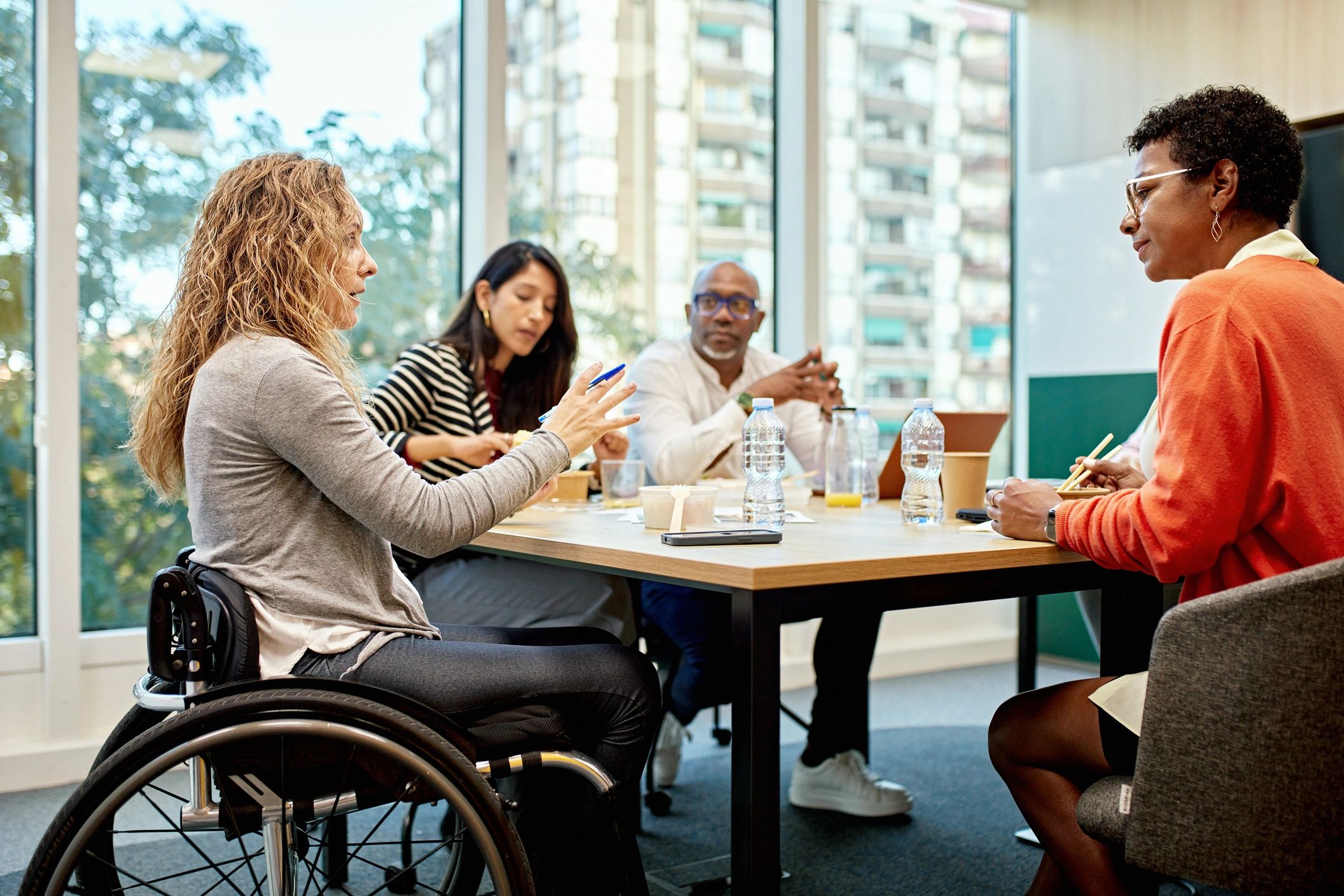
Disability and Friendship: How to Find Your People When the World Wasn't Built for You
Friendship with a disability can feel harder than it should. Here is why that is — and how to actually build the connections you deserve.

Nobody talks enough about how lonely disability can be.
Not the kind of lonely that comes from being physically alone — though that happens too. The kind that comes from being in a room full of people and feeling like you are speaking a different language. The kind that comes from watching friendships quietly dissolve after a diagnosis, or realizing that the social world you used to navigate easily no longer fits the life you are actually living.
Friendship with a disability is complicated in ways that are hard to explain to people who have not experienced it. And yet it is one of the most important things you can build — for your mental health, your sense of identity, and your ability to get through the hard days.
So let's talk about it honestly.
Why Friendship Gets Harder After Disability
If you have noticed your social circle shrinking since you became disabled — or since your condition worsened — you are not imagining it, and it is not your fault.
Several things happen that make friendship harder:
Energy and capacity change. Chronic illness, pain, and fatigue mean that social interaction costs more than it used to. Saying yes to things requires calculating whether you will pay for it tomorrow. That math is invisible to most non-disabled friends, and it can make you seem flaky, distant, or hard to make plans with — even when you desperately want connection.
Spontaneity disappears. A lot of friendship runs on spontaneity — the last-minute invite, the impromptu hangout, the "let's just go." When you need to plan around accessibility, medication schedules, energy levels, and transportation, spontaneity becomes a luxury you often cannot afford. Friends who do not understand this may stop inviting you.
The world is not built for you. The bar everyone wants to go to has three steps at the entrance. The hiking trail is not accessible. The concert venue has no seating. The social infrastructure of adult friendship assumes a body and a life that many disabled people do not have — and navigating that constantly is exhausting.
People do not know how to show up. Most non-disabled people have not been taught how to be a good friend to someone with a disability. They may pull back out of discomfort, say the wrong thing and then avoid you out of embarrassment, or treat you differently in ways that feel patronizing even when well-intentioned. The friendship does not always survive their learning curve.
None of this means friendship is impossible. It means you may need to be more intentional about it than most people do.
What Actually Makes a Good Friend When You Are Disabled
Before you can find your people, it helps to know what you are looking for. Not every friendship is worth the energy it costs — and when your energy is limited, that matters.
The friendships that tend to last and nourish are ones where:
- You do not have to explain yourself constantly. Whether that means friends who are also disabled, or non-disabled friends who have genuinely done the work to understand your life, the relief of not having to justify your limitations every time is enormous.
- Flexibility is mutual. Good friends understand that plans may need to change, that some days you cannot make it, and that "I need to cancel" is not a rejection. They also do not make you feel guilty for it.
- Your disability is neither ignored nor the only topic. You want friends who see your whole self — not ones who pretend the disability does not exist (it does), and not ones who reduce you to it.
- The effort goes both ways. Disability can create real imbalances in friendship — you may need more accommodations, more flexibility, more understanding. Good friends give that without keeping score. But they also need to feel like the friendship matters to you, which means showing up in the ways you can, even when those ways look different.
Where to Actually Find Your People
This is the practical part. Where do you look?
Disability-Specific Communities
This is often the most direct path to people who genuinely get it. Online communities, disability-specific organizations, condition-specific support groups, and disability advocacy spaces are full of people who understand your life from the inside — because they are living something similar.
This does not mean every disabled person will be your friend, or that disability is the only thing you have in common. But shared experience creates a shortcut past a lot of the explaining and educating that can make friendship with non-disabled people exhausting.
Look for:
- Condition-specific Facebook groups and Reddit communities
- Local disability organizations and independent living centers
- Disability-focused events, conferences, and meetups
- Online communities built around disability identity and culture
Shared Interests, Accessible Spaces
Friendship built on shared interests tends to be durable. The key is finding spaces where accessibility is built in rather than an afterthought — where you are not spending all your energy managing logistics instead of actually connecting.
Adaptive sports leagues, disability-inclusive arts programs, online gaming communities, book clubs that meet virtually — these are spaces where the activity is the point, and your disability is not the barrier it might be elsewhere.
Being Honest About What You Need
This one is harder, but it matters. A lot of potential friendships stall because disabled people — understandably — do not want to lead with their needs, and non-disabled people do not know to ask.
Being upfront — not in an apologetic way, but in a matter-of-fact way — about what you need to participate tends to filter for the right people. The ones who respond with "okay, what works for you?" are worth your time. The ones who go quiet are telling you something useful.
Letting Old Friendships Evolve
Not every pre-disability friendship will survive the transition — and some of those losses are genuinely painful. But some will, if both people are willing to let the friendship change shape.
That might mean shifting from in-person hangouts to phone calls. It might mean your friend comes to you instead of the other way around. It might mean having a direct conversation about what you need and what you can offer. Some friendships are worth that conversation. Others are not, and knowing the difference is its own kind of wisdom.
The Grief of Friendships Lost
It is worth naming this directly: losing friends after becoming disabled is a real loss, and it deserves to be grieved.
Some people disappear because they are uncomfortable with disability and do not know how to handle it. Some drift away because the shared activities that held the friendship together are no longer accessible to you. Some simply do not make the effort to adapt, and eventually the gap becomes too wide.
None of that is a reflection of your worth. It is a reflection of the limits of those particular people — and of a culture that has not taught most people how to show up for friends whose lives look different from their own.
Grieving those friendships does not mean you are stuck. It means you are honest. And honesty is a better foundation for building new connections than pretending the losses did not happen.
On the Loneliness Itself
Even when you are actively building community, there will be lonely stretches. Disability can be isolating in ways that are structural, not personal — and no amount of effort fully fixes a world that was not designed with you in mind.
What helps is not pretending the loneliness is not there, but also not letting it convince you that connection is impossible. It is not. It is harder, and it requires more intention, and sometimes it looks different than you expected. But it is possible.
Your people exist. Some of them are probably looking for you too.
Related reading:
Explore Topics
Written by
Don't-Dis-Disabilities Team
Content creator and writer sharing insights and stories.